
|
Getting your Trinity Audio player ready...
|
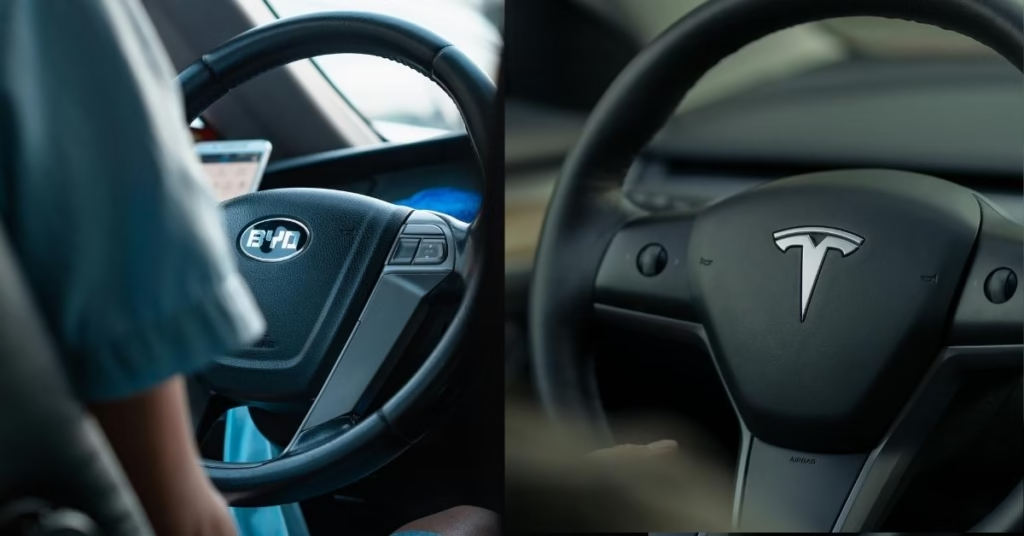
In the electric vehicle (EV) world, two names have dominated headlines over the past decade: Tesla and BYD. Tesla, the brainchild of Elon Musk, popularized EVs with cutting-edge design, mind-blowing performance, and a cult-like brand following. On the other hand, BYD, a Chinese automaker that began as a battery company, quietly scaled up its manufacturing capabilities until it was ready to rival—and eventually surpass—its American counterpart. The moment the world learned that BYD had outsold Tesla in Q4 2023, it marked a major shift in the balance of EV power.
This article explores how BYD went from a company once laughed at by Elon Musk to a global EV powerhouse. We’ll dive into what made BYD’s strategy so effective, examine the numbers that show how they took the lead, and reflect on what this means for Tesla and the rest of the EV market. Whether you’re a Tesla fan, a BYD supporter, or just curious about the future of clean mobility, this piece will offer valuable insights.
BYD’s Strategy and Global Expansion
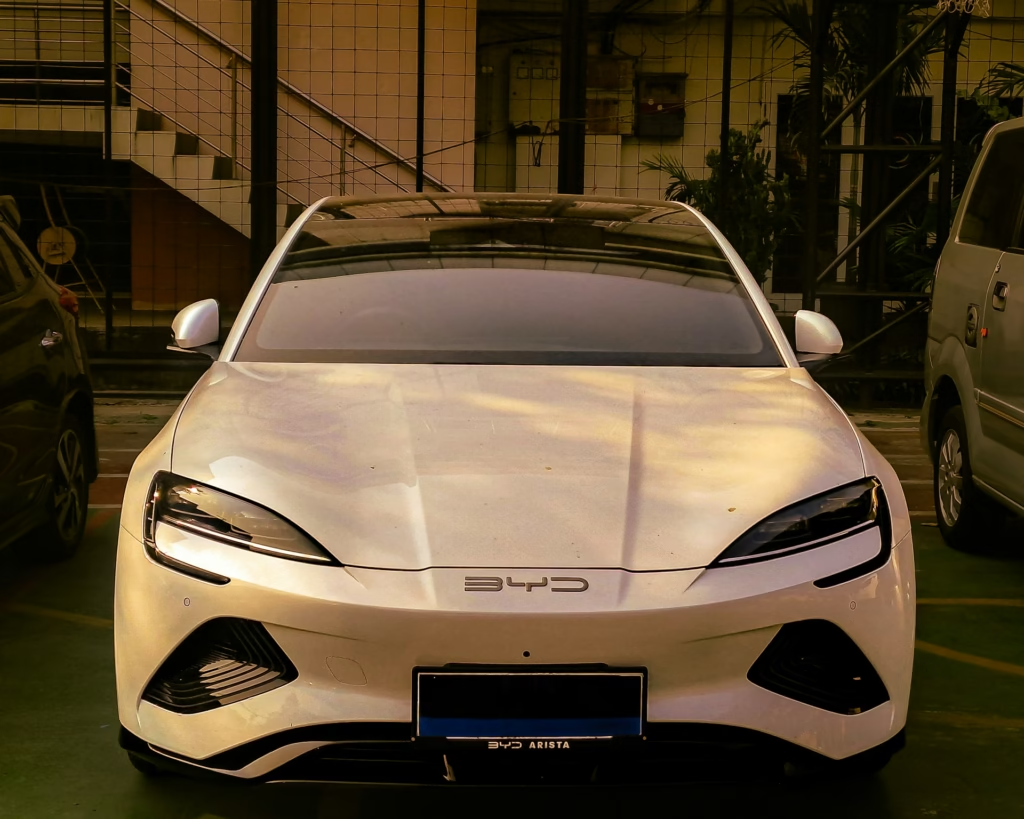
For years, regular customers did not know about BYD outside China. Elon Musk famously laughed in an interview when asked about BYD, saying with a smirk, “Have you seen their car?” That clip aged quickly. Today, BYD has become a global contender by doubling down on affordability, vertical integration, and a localized manufacturing strategy. Unlike Tesla, which initially focused on premium segments, BYD pushed hard into the affordable EV market and rapidly captured mass-market interest.
BYD also benefited from strong government support and an early lead in battery innovation. By making its own batteries through its subsidiary FinDreams, BYD controlled costs and improved supply chain efficiency. The Blade Battery, known for its safety and long life, became a huge competitive advantage. While Tesla relied on partnerships like Panasonic and CATL, BYD created a fully in-house solution.
Moreover, BYD expanded strategically. While Tesla could not scale due to regulatory & logistical hurdles, BYD entered new markets with partnerships and diverse vehicle lineup. BYD now exports to more than 70 countries and has even entered markets where Tesla has minimal or no presence.
Tesla’s Challenges and Missed Opportunities
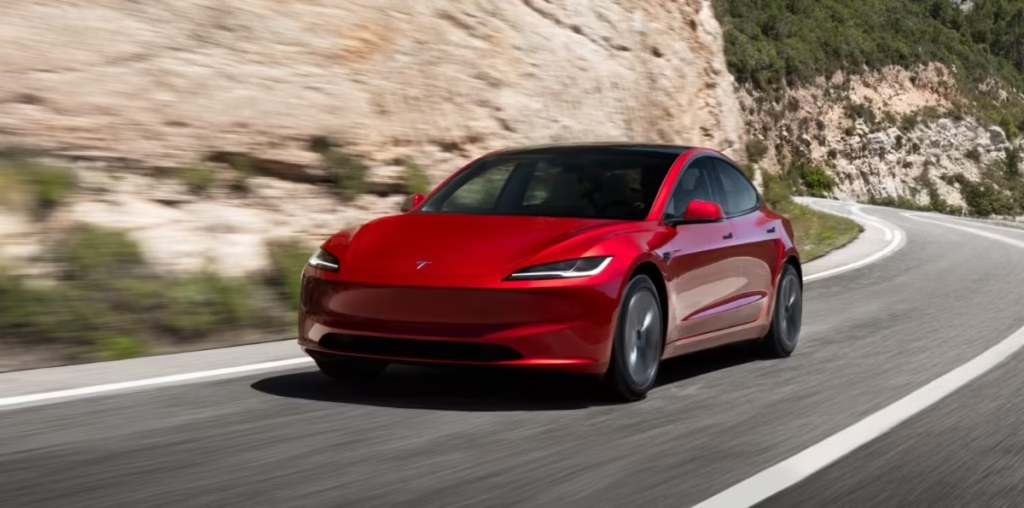
Tesla has long been the EV benchmark, but recent developments have exposed cracks in its strategy. One of Tesla’s most significant vulnerabilities is its heavy reliance on a limited number of models. The Model 3 and Model Y account for the vast majority of Tesla sales. While these vehicles remain competitive, the lack of variety is starting to hurt Tesla in markets where consumer preferences are broader and more diverse.
Tesla also maintains a premium brand image that excludes budget-conscious consumers, especially in emerging markets. Meanwhile, BYD’s models range from budget city cars to luxurious sedans, catering to a wider demographic. For example, BYD’s Dolphin and Seagull models offer quality EV options at prices far lower than anything in Tesla’s current portfolio. This makes a difference in developing economies and densely populated countries.
Another challenge is Tesla’s slow refresh cycle and delays in launching new models. The Cybertruck was delayed for years, and the long-promised $25,000 Tesla still hasn’t materialized. In contrast, BYD churns out new models rapidly, responding quickly to market demands and trends. Tesla’s centralized manufacturing model also makes it harder to be agile in different regions.
Tesla also saw its once-celebrated Full Self-Driving (FSD) software come under fire. Regulatory pressure, software issues, and safety concerns have hampered adoption, affecting Tesla’s brand trust. BYD, in contrast, has kept its focus more grounded, ensuring its cars perform exceptionally well in practical, real-world use cases without overpromising futuristic tech.
The Numbers That Changed Everything
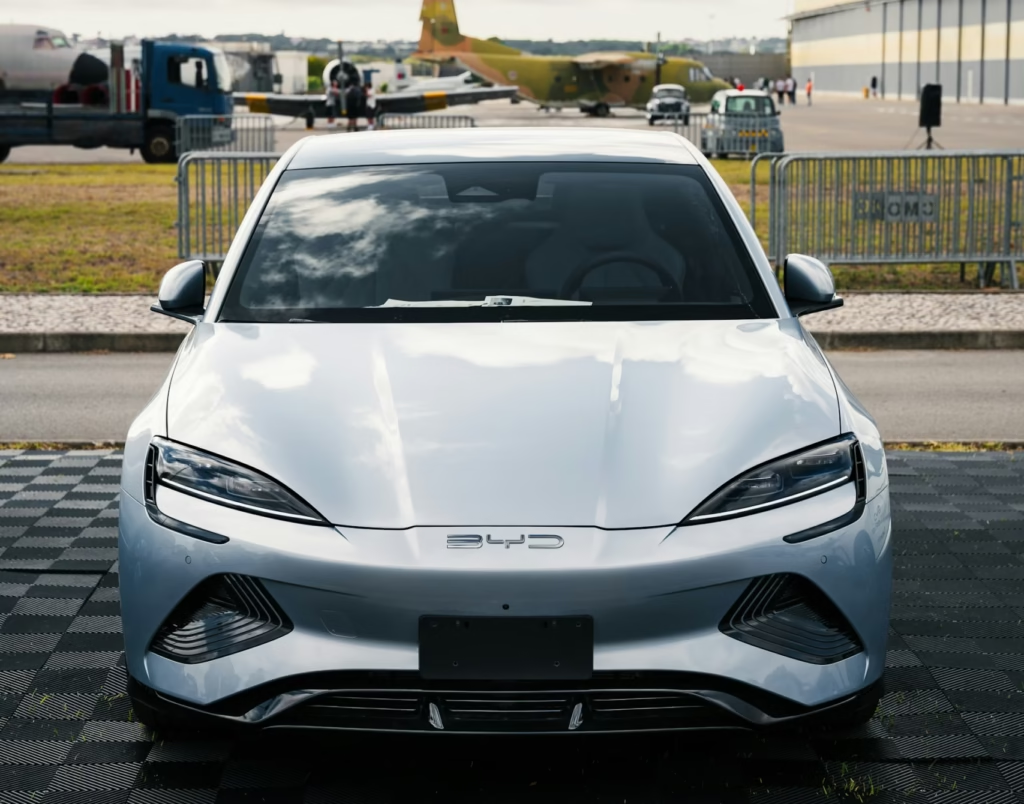
In the fourth quarter of 2023, BYD sold over 526,000 battery electric vehicles (BEVs), edging past Tesla’s 484,000 units and claiming the crown of the world’s top BEV maker for the first time. The numbers stunned the industry—not just because of what they represented but how they were achieved. BYD did it by producing more models at lower prices, with faster turnaround, and with fewer delays.
This wasn’t just a lucky quarter. BYD has been closing the gap steadily since 2021. In fact, when plug-in hybrids are included (which Tesla doesn’t make), BYD has been ahead for several quarters. What changed in Q4 2023 is that it finally surpassed Tesla in pure electric vehicle sales—Tesla’s core territory.
Even more telling is that BYD accomplished this with most of its sales coming from China. Now that BYD is pushing globally with strategic deals like the one with Saudi Aramco source, it’s poised to dominate. Meanwhile, Tesla has slowed factory output and cut prices to remain competitive, reducing its once-comfortable margins.
Internal competition is also a factor. Tesla’s Model 3 is not looking able to handle a flood of affordable Chinese models, including BYD’s Qin Plus and Seal.
If you’ve read our Tesla Model 3 review, you’ll know it still holds up well—but it’s no longer the only compelling option for budget-conscious EV buyers.
Conclusion
A few years ago, Elon Musk chuckled when asked about BYD. Today, he’s not laughing. The company he once dismissed now leads the EV pack, thanks to aggressive innovation, broad accessibility, and fast execution. Tesla isn’t down and out—it still has a strong brand, advanced tech, and global mindshare—but the landscape has changed. The competition is real, and BYD is no longer the underdog.
The race is far from over, and Tesla could very well regain the top spot with new launches and software breakthroughs. But for now, the EV crown belongs to a company that proved consistency, affordability, and local adaptation can win over hype. What do you think—is Tesla going to strike back, or is BYD just getting started?
For more comparisons, check out our in-depth Geely Geometry C review to see how another Chinese contender stacks up.