
|
Getting your Trinity Audio player ready...
|
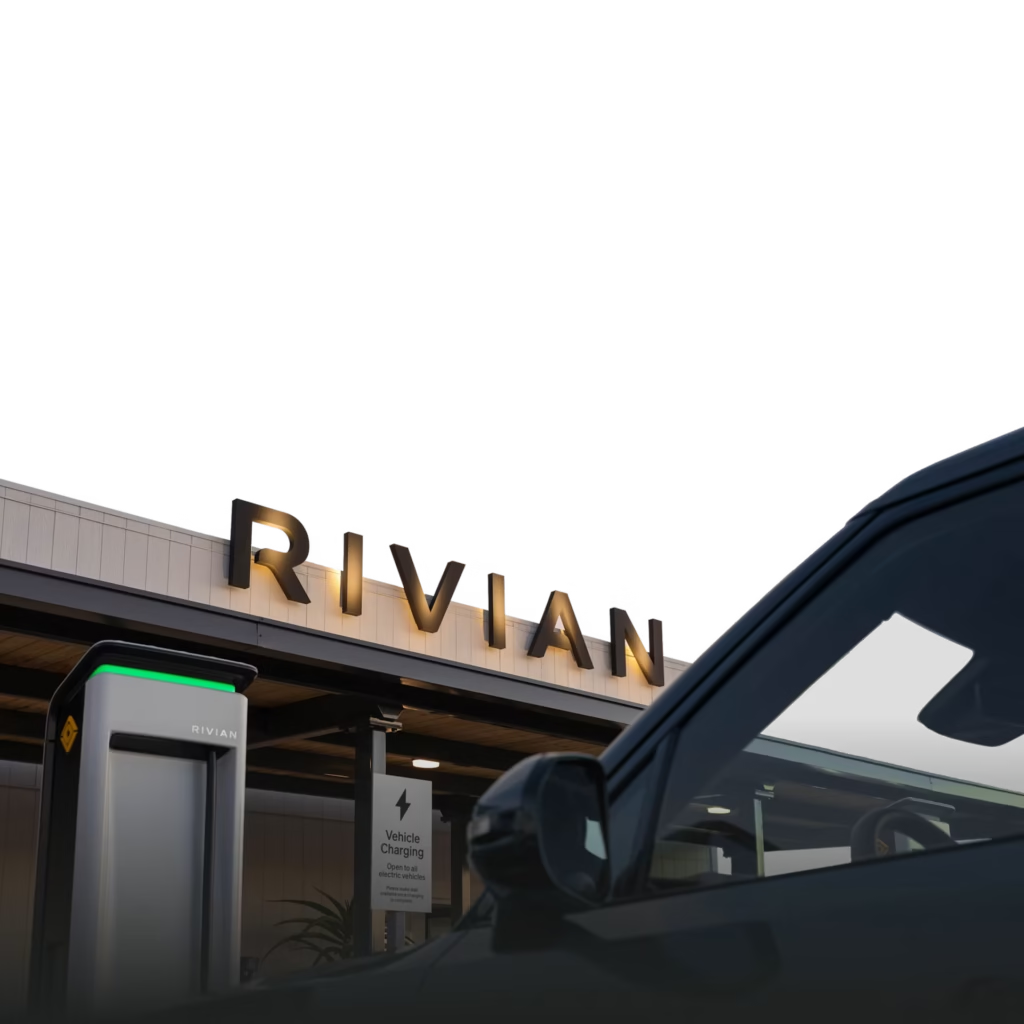
Volkswagen Rivian Partnership could be the boldest move in the EV space this year. In late June 2025, Volkswagen confirmed a massive $1 billion investment into Rivian, with a total $5 billion planned over the next few years. This isn’t just about funding—it’s about collaboration.
The two companies announced a strategic joint venture that aims to co-develop electric vehicle software and vehicle platforms. VW hopes to leverage Rivian’s agile technology to fix its long-standing software delays. Rivian, in return, gains much-needed capital and the ability to scale faster. Could this alliance finally deliver fast, affordable EVs that compete with China’s rapid rise? Time will tell—but the stakes couldn’t be higher.

What’s in the Deal?
The Volkswagen Rivian Partnership officially began with a $1 billion investment, but that’s just the starting line. Volkswagen plans to pour up to $5 billion into this collaboration over the next few years, a commitment that signals more than just financial interest. It’s about building a joint venture focused on electric vehicle architecture and software, with the first co-developed vehicles expected by 2026.
Rivian brings something Volkswagen has been struggling with for years: a mature EV platform and in-house developed software stack that actually works. This partnership will allow VW to integrate Rivian’s “skateboard” EV platform and operating system into its own vehicle lineup. Both companies will keep their own product lines, but they’ll share key technologies behind the scenes—essentially fast-tracking Volkswagen’s entry into the next phase of electric mobility.
The new company will be co-run by executives from both sides, with engineering teams starting joint work as early as late 2025. The goal? Reduce time-to-market, lower costs, and finally build EVs that deliver cutting-edge features without the high price tag or long development delays.
Why VW Needs This
Volkswagen has big ambitions in the EV space, but its rollout hasn’t gone as planned. While models like the ID.3 and ID.4 showed promise, VW has been plagued by software delays, clunky interfaces, and ongoing issues with its in-house software division, Cariad. Multiple leadership shakeups and missed deadlines have left the brand lagging behind both legacy rivals and more agile startups.
That’s where Rivian steps in. With its clean, user-friendly in-house operating system and proven EV architecture—already powering the R1T, R1S, and Amazon’s electric delivery vans—Rivian gives VW something it desperately needs: working tech that customers like. Instead of spending years fixing bugs and rebuilding its software from scratch, VW now has the chance to plug into Rivian’s existing ecosystem.
The partnership could also help Volkswagen cut development time in half. Rivian has shown it can design and launch new vehicles in under three years—compared to the traditional 4–5 year cycles most OEMs still rely on. For a company trying to fend off competition from Chinese EV giants and keep up with Tesla, this kind of acceleration is critical.
In short, this isn’t just a financial investment—it’s a lifeline for VW to stay relevant in an industry moving faster than ever.
What Rivian Gets in Return
While Volkswagen gets tech that works, Rivian walks away with something it really needs: cash, credibility, and scale.
After posting a 23% drop in Q2 2025 deliveries, Rivian is under pressure. Though its products are beloved by early adopters, scaling production and reducing costs have proven difficult. The $1 billion from Volkswagen offers a financial cushion—crucial as Rivian prepares to launch its highly anticipated R2 crossover in 2026, targeting a more affordable $45,000 price point.
Beyond funding, Rivian gains access to Volkswagen’s global manufacturing and supply chain muscle. That could be a game-changer for a company still figuring out how to scale without burning billions. Building EVs profitably is the next big challenge—and VW knows how to build at volume.
This partnership also gives Rivian an entry ticket to global markets it hasn’t fully tapped yet, particularly Europe, where VW has strong dealer networks and brand recognition. If the joint venture succeeds, Rivian could leapfrog into new territories faster and more efficiently than going solo.
In return for its tech, Rivian receives a powerful production partner that can help turn innovation into mainstream adoption.
What This Could Mean for Us (Consumers)
For EV buyers, the Volkswagen Rivian partnership could bring more than just headlines—it might actually deliver better, more affordable electric vehicles.
Volkswagen has struggled to offer compelling EVs below the €35,000 (~$38,000) mark. Rivian, on the other hand, has already announced plans for the R2, a compact SUV aimed squarely at the mass market. With VW’s support and scale, that vision could come to life sooner and at a lower price. And because both brands will keep their individual identities, consumers may end up with more choices across price points, not fewer.
There’s also hope for improved software experiences. Rivian’s user interface and over-the-air update system have received strong praise—something VW customers have long asked for. If this technology makes its way into VW’s next-gen models, buyers could finally see smoother infotainment, better app integration, and more responsive digital systems.
Perhaps most exciting: this joint effort may lead to a wave of practical EVs by 2026, not just luxury options. For drivers looking to transition from gas to electric without breaking the bank, the partnership could bring real competition to Tesla, BYD, and others dominating the affordable EV space.
Of course, this all depends on execution. But if things go to plan, this tie-up might reshape what everyday consumers can expect from an EV—without the compromises.
Verdict & Outlook
The Volkswagen Rivian partnership is bold, strategic, and full of potential—but also full of risk. If both companies align their strengths—Rivian’s tech with VW’s manufacturing scale—we could witness a new wave of affordable, software-friendly EVs hitting global markets by 2026.
But it won’t be easy. Cultural differences, execution delays, and integration headaches could slow things down. Consumers have heard big promises before. The EV world is unforgiving to those who can’t deliver on time—or on price.
Still, this move is a clear signal: the race for EV dominance is no longer just about batteries and range. It’s about collaboration, speed, and adaptability. And with the right balance, this joint venture could set a new standard for what’s possible in the mass-market EV space.
All images used in this article are sourced from the official Volkswagen Group and Rivian websites.
