
|
Getting your Trinity Audio player ready...
|
Is today the best time ever to buy an EV? That’s the question electric vehicle shoppers around the world are asking as prices drop to record lows, dealerships slash lease rates, and government incentives edge closer to expiration. With more EVs in stock than ever before and brands like Kia and Nissan offering aggressive promotions, the summer of 2025 is shaping up to be a buyer’s market.
But this perfect storm of discounts and urgency comes with a catch: will EV prices keep falling, or is this your last shot before incentives vanish for good? In this article, we break down the numbers, the timing, and the trade-offs to help you decide if right now really is the smart move.
Massive Discounts & Inventory Overflow
If you’re wondering whether this is the best time to buy an EV, the answer might be written on every dealership lot. Electric vehicles are piling up across North America and Europe, with automakers like Kia, Hyundai, Ford, and Nissansitting on excess inventory. The result? Some of the lowest prices we’ve ever seen.
For example, the Kia Niro EV is now available in the U.S. for as little as $129/month on a lease deal—cheaper than many phone plans. Hyundai has slashed prices on the Ioniq 5, and even legacy brands like Volkswagen are joining the discount race. These aren’t stripped-down versions either; most models come loaded with tech, range, and comfort.
The oversupply is being driven by slower-than-expected EV adoption and a backlog of unsold 2024 models. Dealerships are now under pressure to clear space before Q4 2025 stock arrives, meaning buyers are in the driver’s seat, literally and financially.
If you’ve been holding out, this could be the best time to buy an EV simply because prices, lease terms, and incentives may never align this perfectly again.
The Disappearing $7,500 Federal EV Tax Credit (U.S. Only)
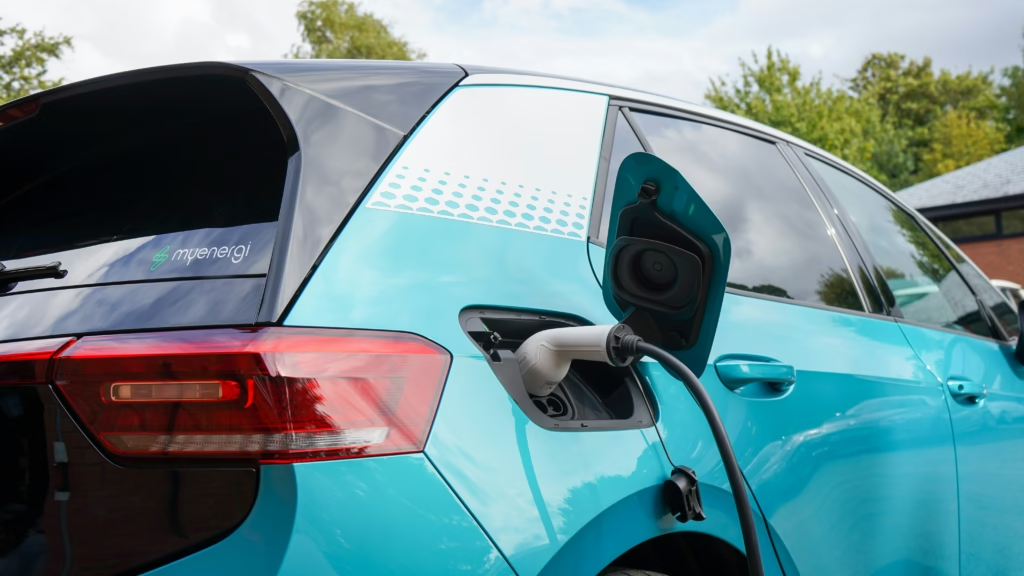
If you’re in the United States, there’s another reason why this might be the best time to buy an EV: the federal $7,500 tax credit is about to disappear for most models. According to the latest U.S. legislation, the clean vehicle tax credit will expire on September 30, 2025—a deadline that has automakers and buyers scrambling.
Right now, many electric vehicles qualify for this incentive only if they meet specific battery sourcing and manufacturing requirements. Some brands like Tesla, Rivian, and Ford have EVs that qualify, while others no longer do. On top of that, leases often bypass these restrictions, making it easier for drivers to still claim the full credit.
Once the credit ends, prices for new EVs in the U.S. could effectively rise by thousands of dollars overnight, making current deals far more attractive in comparison. That makes summer 2025 not just a sweet spot for lease rates—but potentially the last chance to combine discounts with federal savings.
If you’re based in the U.S., and considering a switch to electric, this shrinking window might be your best opportunity to act.
Leasing vs Buying in This Market
In 2025, leasing an EV may be the smartest play—especially if you’re unsure about long-term resale value. Automakers are flooding the market with aggressive lease deals to keep inventory moving, and leasing often qualifies for the full $7,500 federal EV credit even when the purchase option doesn’t. That’s why we’re seeing sub-$150/month offers on models like the Nissan Leaf, Chevy Bolt EUV, and Kia Niro EV. Leasing also helps you sidestep concerns about future depreciation, battery life, or software updates—issues that can become costly when you own.
However, if you’re planning to keep your vehicle for the long haul, buying still holds value. EVs generally have lower maintenance costs, and as charging infrastructure grows, long-term ownership becomes more practical. But with prices fluctuating and incentives set to expire, locking in a purchase now might be the best time to buy an EV—before both affordability and incentives vanish in the rearview mirror.
Are EVs Finally Practical for Daily Life?
One of the biggest questions for potential EV buyers today isn’t just about price—it’s about practicality. Can an EV really replace a gas-powered car for everyday use? In the U.S. and most of Western Europe, the answer is increasingly yes. These regions have built mature charging networks, and for drivers with home access to charging, EVs offer smooth, quiet, and efficient daily commutes. The only major limitation remains for apartment dwellers, who may not have a dedicated charging point yet—but even that is slowly improving with shared charging stations and workplace solutions.
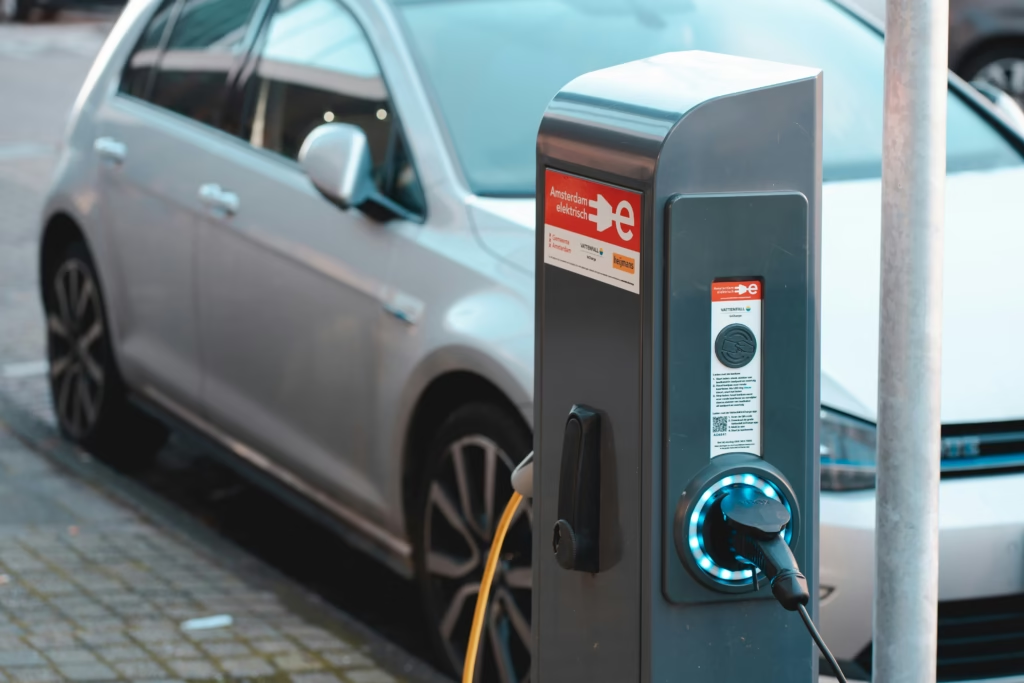
In China, the situation is even more advanced. With some of the fastest chargers in the world and a government-backed infrastructure push, EVs are now favored over traditional combustion cars in many cities. But the picture isn’t as clear elsewhere. In Africa, the Middle East, and parts of Eastern Europe and Southeast Asia, EV adoption still faces major hurdles—limited public charging, higher upfront costs, and a lack of supporting infrastructure. For drivers in these regions, an EV can still be a leap of faith. However, for those in more developed markets, the combination of improving infrastructure and aggressive pricing makes this potentially the best time to buy an EV.
The Catch – Are Prices Dropping Too Fast?
While today’s EV deals are tempting, some buyers worry they could be buying into a falling market. Prices for electric vehicles have dropped significantly in the last 12 months, with manufacturers slashing MSRPs and offering aggressive lease incentives. This raises a valid concern: if prices continue to fall, will today’s buyers face steep depreciation or miss out on even better offers in a few months?
This uncertainty is real—especially as newer, cheaper models from China and start-ups flood global markets. But it’s also important to remember that EV prices won’t drop forever. Raw material costs for batteries are stabilizing, and regulatory pressure is tightening in many countries, which could push prices back up in 2026. For buyers who need a vehicle now and plan to keep it for a few years, the combination of lower prices, tax incentives, and generous lease terms makes this arguably the best time to buy an EV, even if values fluctuate in the short term.
Final Thoughts: A Unique Window of Opportunity
Between overflowing inventories, disappearing tax credits, and aggressive manufacturer incentives, mid-2025 presents a rare opportunity for electric vehicle buyers. Never before have prices been this low, and never has the range of choices been this wide. For buyers in regions with mature infrastructure—like the U.S., Europe, or China—the path to EV ownership has never looked more practical or affordable.
Still, this window may not stay open for long. Once incentives vanish and inventory stabilizes, prices could climb again. For those who’ve been waiting on the sidelines, all signs suggest that this may truly be the best time to buy an EV—before the market resets and the deals disappear.
Disclaimer: Images used in this article are sourced from official manufacturer websites and public domain materials.