
|
Getting your Trinity Audio player ready...
|
Tesla enters India, and it’s not just another headline—this is a major shift for the global EV market. After years of delays and negotiations, the American EV giant is finally opening its first showroom in Mumbai in July 2025.
India ranks as the third-largest car market in the world. Yet until now, Tesla stayed away due to high import taxes and limited charging infrastructure. Things are changing fast. With a warehouse already in place and the Model Y likely arriving first, Tesla is betting big on Indian roads.
This launch could reshape India’s EV scene, pressure local automakers, and attract a new wave of tech-savvy buyers. But will the price be right?
Tesla’s Indian Debut – What We Know
After years of speculation, Tesla enters India with a confirmed first showroom set to open in Mumbai. The launch marks the brand’s formal debut in a country that has long awaited its presence.
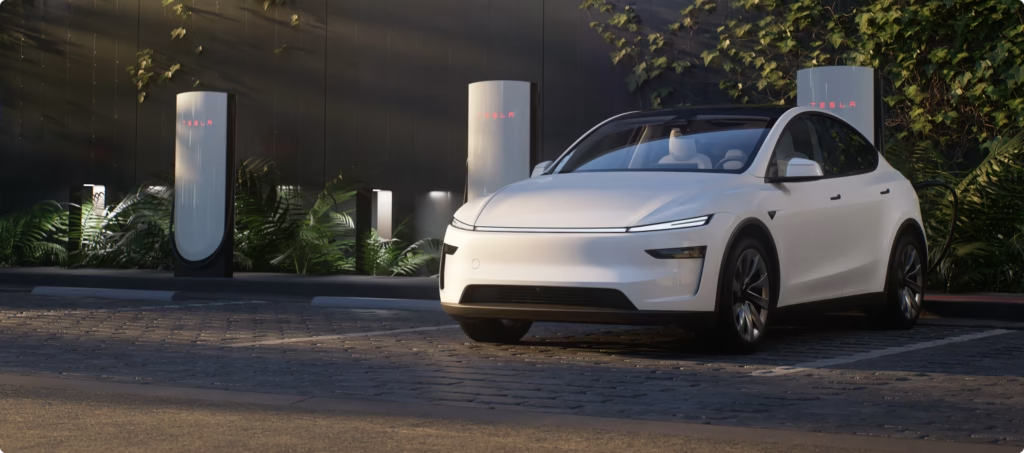
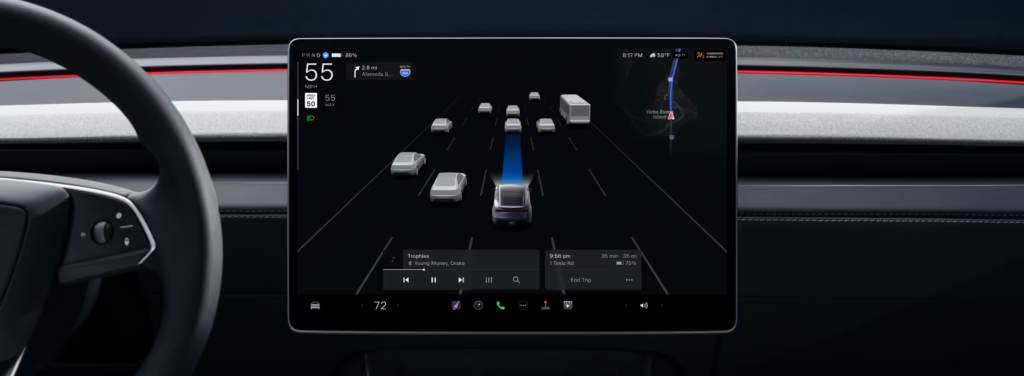
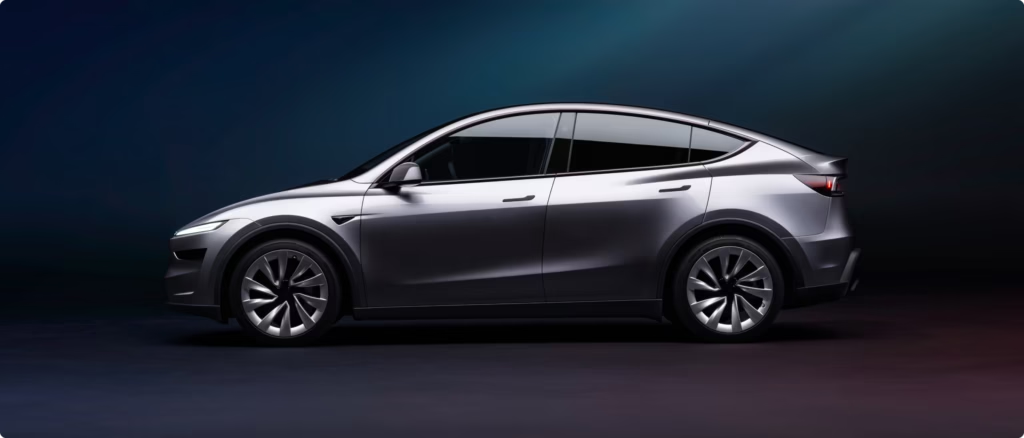
The first model expected to hit the Indian market is the rear-wheel-drive Tesla Model Y, imported directly from Tesla’s Gigafactory in Shanghai. This choice makes sense—it’s Tesla’s global best-seller, offering decent range, practicality, and a strong brand image.
Tesla has already secured warehouse space in the region, signaling more than just a symbolic launch. Local logistics, including parts storage and early charging station plans, suggest that the company is preparing for a long-term presence, not just testing the waters.
Why India Matters for Tesla
India is more than just another market—it’s a strategic opportunity. With over 4 million cars sold annually, urban traffic challenges, and a growing interest in green technology, Tesla enters India at a time when consumers are starting to take EVs seriously.
Government incentives, rising fuel prices, and increased environmental awareness are pushing more people to consider electric cars. Local brands like Tata and Mahindra have already built a base in the affordable EV segment. Still, Tesla brings a premium badge, cutting-edge tech, and a strong global reputation.
The move also comes as global EV growth slows in saturated markets like Europe and the U.S. India offers fresh ground, especially among younger buyers in cities like Mumbai, Delhi, and Bengaluru—if Tesla can get the pricing and support right.
Charging & Service – Is India Ready?
A big question as Tesla enters India is whether the country’s infrastructure can support the brand’s ecosystem. Tesla isn’t just about cars—it’s about the full package: charging, software, and service.
So far, Tesla has leased warehouse space for parts and charging equipment, hinting at plans to roll out its Supercharger network. That’s crucial, since most existing public charging stations in India are too slow or incompatible with Tesla’s charging system.
Service remains another challenge. India’s vast geography and mixed road conditions make after-sales support a key part of success. Tesla may need to invest heavily in training local technicians and setting up regional service hubs if it hopes to scale beyond major cities.
Impact on the Indian EV Market
Tesla enters India, and that alone could push the EV conversation to the next level. The brand holds prestige. For many buyers, it symbolizes innovation, sustainability, and status—all in one.
Tesla’s presence could pressure domestic automakers like Tata and Mahindra to improve design, tech, and range. It may also encourage startups and traditional OEMs to speed up EV launches. Consumers, especially younger ones, might shift expectations toward connected, software-rich vehicles.
This move could also attract government interest in accelerating EV infrastructure rollout. A serious Tesla entry might spark new public-private partnerships, more investment in charging stations, and perhaps even future discussions around lowering import duties.
What Models Might Come Next?
Tesla’s initial launch might focus on the Model Y, but that’s just the beginning. The more affordable Model 3 could follow, assuming Tesla gauges enough interest. Long-term, the most exciting possibility is local production of Tesla’s next-generation compact EV—rumored to cost under $25,000 globally.
However, Tesla would need the Indian government to adjust import duties or offer production incentives to make local assembly viable. It’s worth noting that Elon Musk has met with Indian officials in the past about this very topic. If things go well, we might see a future where Teslas are not just sold in India—but built there.
Verdict: Bold Move, Tough Market
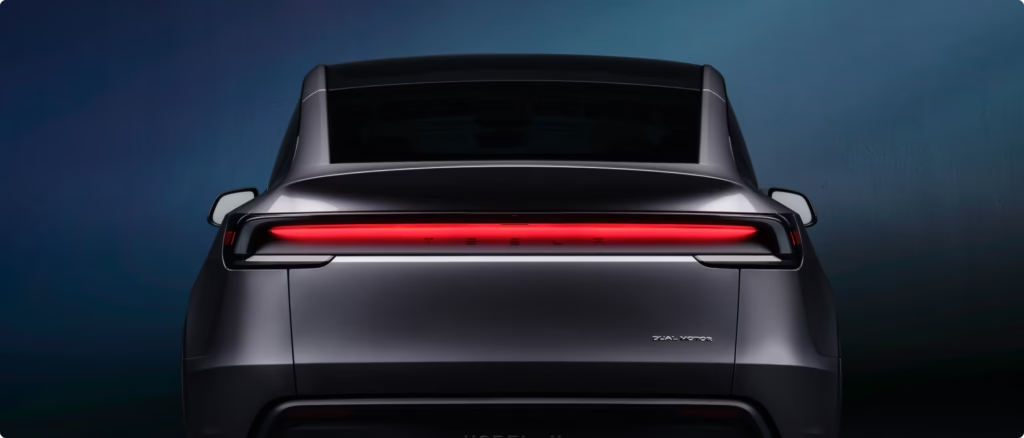
Tesla enters India at a time when the EV scene is heating up, but challenges remain. The Model Y launch brings global prestige and cutting-edge tech to Indian roads, but sky-high import duties could put it out of reach for most buyers. Still, the brand’s arrival sends a strong message—it’s a vote of confidence in India’s EV potential.
Tesla’s success here will depend on how fast it can build charging infrastructure, offer reliable service, and maybe even localize production. Until then, the market impact may be more symbolic than practical. But symbolic moments often mark turning points—and this could be one of them.
Disclaimer: All images used in this article are sourced from the official Tesla website — https://www.tesla.com/fr_fr/modely. ReportEV does not claim ownership of the visuals.
